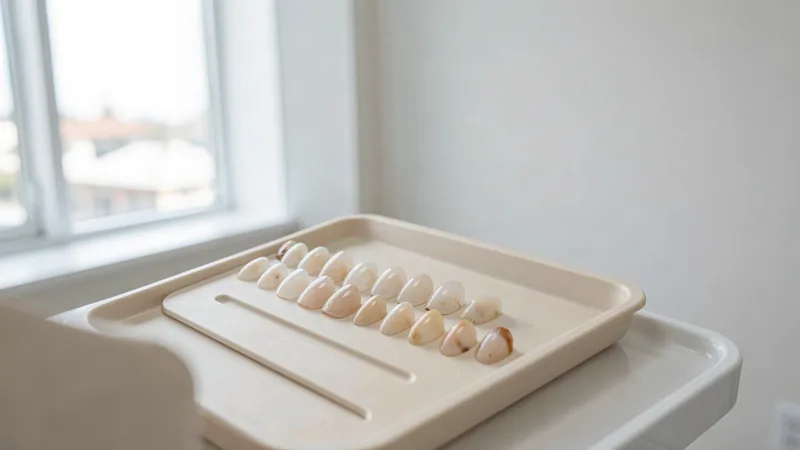
“Biomimetic” comes from the Greek bios (life) and mimesis (to imitate) — literally, “mimicking nature.” In dentistry, biomimetic means restoring damaged teeth in a way that behaves like the original tooth: flexible where the tooth is flexible, sealed where the tooth is sealed, and preserved wherever healthy structure remains. For patients in Green Bay, Wisconsin who want to keep their natural teeth as long as possible, it may be the most important concept in modern restorative care. If you have been weighing up cosmetic dentistry blog for a home around Green Bay, WI, this guide covers how it actually works, what it tends to cost, and where the results usually fall short.
Your natural tooth is a precision instrument
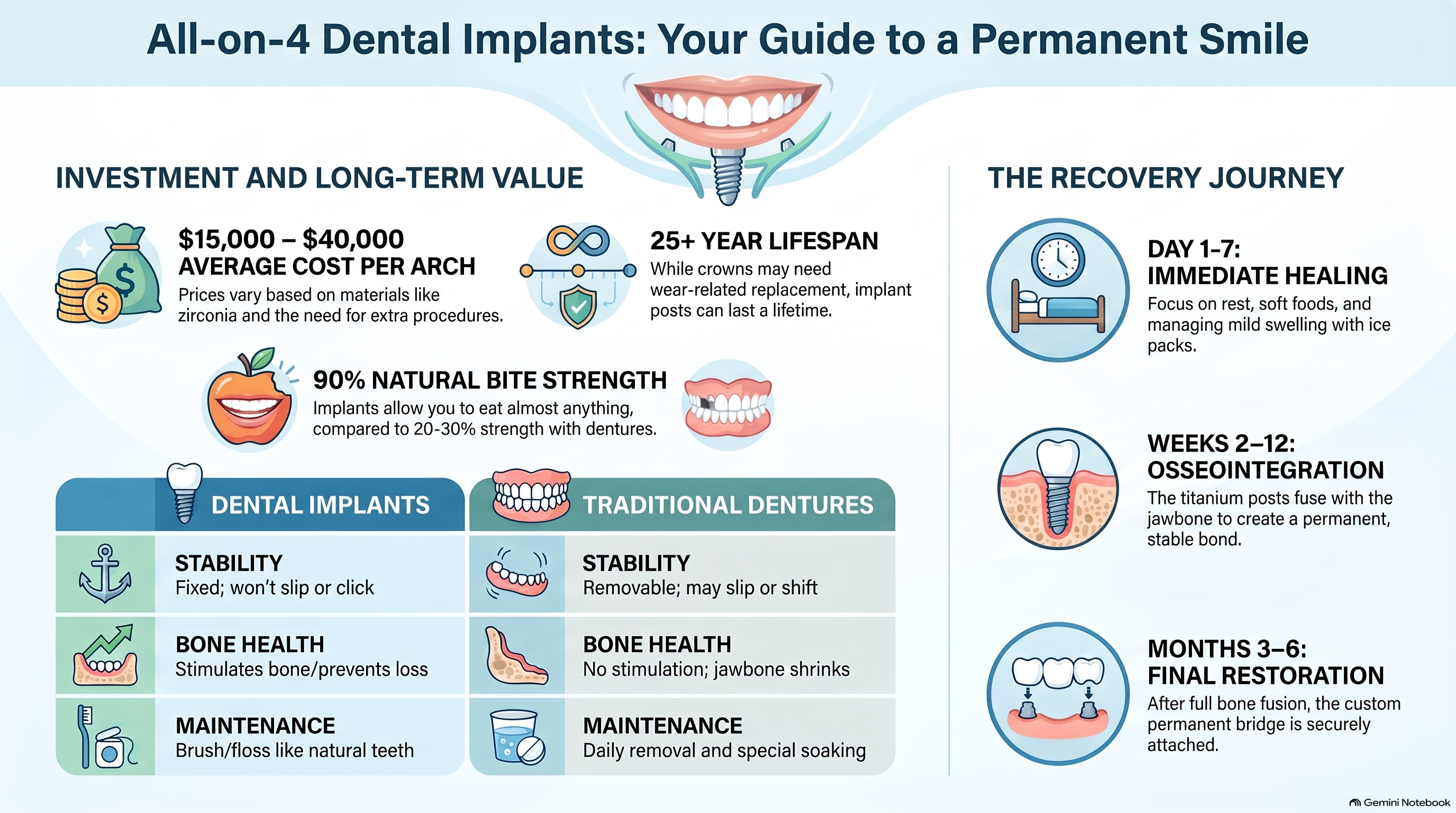
Evolution has had hundreds of thousands of years to perfect the tooth — in fact, the structural design of natural teeth has remained essentially unchanged for over 400,000 years. A tooth is a layered system: hard enamel on the outside, resilient dentin beneath, and a vital, sensitive pulp at the core. It flexes slightly under chewing forces and distributes stress evenly across its surfaces. Traditional restorative materials, by contrast, are rigid and static. Biomimetic dentistry uses biocompatible materials and advanced adhesive chemistry to replicate the natural elasticity, stress distribution, and physical dynamics of that layered structure — rather than overpowering the tooth with mechanical hardware.
The biological cost of traditional crowns
Traditional full-coverage crowns carry a heavy price: the irreversible, circumferential removal of 60% to 75% of the healthy tooth's structure, shaving it down to a small, compromised peg — the reduction is roughly the thickness of a quarter taken all the way around. Because crowns rely on mechanical retention, dentists must undercut and over-prepare teeth. That aggressive preparation concentrates biting forces at the cervical margins, making the remaining tooth highly susceptible to vertical root fractures. Shaving healthy structure also brings mechanical margins dangerously close to the dental pulp, causing thermal and vibratory trauma that can lead to pulpal necrosis (nerve death) — which is why so many crowned teeth end up needing root canals, replacement crowns, and eventually extraction. It is the “destroy the tooth to save it” cycle.
Preservation over preparation: the biological savings account
Biomimetic preparation flips the equation. Instead of removing healthy structure, the dentist removes only diseased tissue — typically 10% to 30% structure loss, retaining up to 90% of the natural tooth. Caries-detecting dyes make decay clearly visible so maximum healthy dentin is preserved and pulp blood flow stays vital. The clinical payoff is dramatic:
- A 90% to 95% reduction in root canal therapy, because keeping the pulp vital and healthy clinically eliminates the most common reason crowns fail.
- Up to a 400% increase in bond strength through advanced chemical bonding protocols, establishing a complete, continuous bacterial seal.
- Less post-operative sensitivity and pain, because far less drilling and thermal trauma are involved.
Traditional crowns vs. biomimetic restorations
| Biomechanical parameter | Traditional full-coverage crowns | Biomimetic inlays and onlays |
|---|---|---|
| Required tooth reduction | Aggressive circumferential preparation (60–75% structure loss) | Conservative partial preparation (10–30% structure loss) |
| Endodontic failure risk | High — thermal trauma or microleakage causes pulpal necrosis | Very low — conservative preparations preserve vital pulp blood flow |
| Force and stress distribution | Rigid capping; forces concentrate at cervical margins | Flexible bonding; materials flex with natural structure to absorb stress |
| Marginal leakage profile | High if the mechanical cement interface degrades | Negligible — chemical bonding seals out oral bacteria |
| Repairability and salvageability | Poor — fractured crowns require complete removal and replacement | Excellent — minor chips are repaired chairside with additive resin |
The tools of biomimetic dentistry
- Porcelain inlays and onlays: custom-milled ceramic “indirect fillings” that fit like precise puzzle pieces, restoring missing anatomy while chemically reinforcing the remaining tooth cusps to absorb heavy biting forces.
- Layered composite resins: high-strength, biocompatible composites applied in conservative, incrementally cured layers that replicate natural dentin.
- Stress-reduced layering: advanced incremental curing protocols that eliminate polymerization shrinkage stress and prevent micro-gap formation.
- Micro-precise bacterial seal: a continuous, non-degradable chemical seal at the margins that completely blocks oral bacteria and eliminates secondary decay.
Designed for a lifetime of structural integrity
Because biomimetic restorations mimic natural tooth elasticity, they flex under bite pressure, distributing masticatory forces evenly and preventing the material fatigue and ceramic cracking that plague rigid crowns. Margins are placed supragingivally — about 0.5 mm above the gum line — eliminating the gum inflammation and bone loss associated with subgingival crown margins. And because the natural tooth core is preserved, every future option stays on the table: if a restoration ever needs attention, minor chips are repaired additively rather than requiring full replacement. The upfront cost of biomimetic dentistry can be slightly higher because the protocols are meticulous and time-intensive. But by preventing repeat crown replacements, root canals, and surgical extractions, it routinely saves patients thousands of dollars over a lifetime. Ask a Green Bay, Wisconsin dentist whether your restoration can be done biomimetically — many teeth that were once automatically crowned can now be saved with a bonded inlay, an onlay, or layered composite. Your natural tooth is the best implant ever designed; the goal of modern dentistry is to keep it.